
Photo by Solen Feyissa on Pexels
Start with the thing you already ignore
Every phone has a voice memo app. It's usually buried two folders deep, next to the flashlight widget and the barometer nobody asked for. You've probably opened it twice: once by accident, once to record a weird noise your car was making.
That's a shame, because paired with AI transcription, that ignored little app has become one of the most genuinely useful productivity tools I own — more useful, honestly, than most of the AI apps I've tested and abandoned. Not because talking is faster than typing (it isn't, always), but because talking captures thoughts that typing lets slip away entirely.
I've written before about the AI email rewriting trick that actually saves time. This is the other side of that coin: instead of using AI to clean up words you already wrote, you use it to catch words you never would have written down at all.
Why your best ideas happen when your hands are busy
Think about when your clearest thinking actually happens. For a lot of people it's in the shower, on a walk, during the boring part of a commute — moments when your hands are occupied and your phone is either wet, far away, or unsafe to look at. Typing a note in that moment isn't an option. Talking is.
The problem used to be that voice memos were a dead end. You'd record three minutes of rambling, forget about it, and rediscover it two months later as an unlabeled file called "New Recording 47." Nobody was going to transcribe that by hand.
AI changed the economics of that completely. Transcription that used to require a human assistant or a paid service now happens automatically, often on the device itself, in close to real time. The bottleneck isn't turning speech into text anymore. It's what you do with the text once you have it.
What "AI transcription" actually means in 2026
A few different tools do this job, and they're not identical:
- Built-in voice memo transcription (iPhone's Voice Memos, Android's Recorder app) — free, on-device on many phones, good for quick capture.
- AI voice mode in chat apps (ChatGPT, Claude, Gemini) — you talk directly to the assistant instead of recording first and transcribing later, which skips a step but works best for shorter, more conversational input.
- Dedicated meeting/note apps (Otter and similar) — built for longer recordings, multiple speakers, and searchable transcripts over time.
They all solve the "turn sound into text" problem reasonably well now. Where they differ — and where most reviews stop looking — is what happens after the transcript exists. A wall of unpunctuated, rambling text is not a note. It's raw material.
A worked example: turning a mess into a plan
Say you're driving home and you record a two-minute voice memo about a work project, because three unrelated thoughts hit you at once: a deadline you're worried about, an email you forgot to send, and an idea for how to structure a presentation.
The raw transcript reads like actual speech — because it is:
> "okay so I need to remember that the Thompson thing is due Friday not Monday like I thought and also I never sent that follow up to Dana about the budget numbers and honestly I think the presentation would work better if we put the results section first instead of last because nobody's going to sit through ten minutes of methodology before they get to the point..."
That's not a to-do list. It's a voice recording with three tasks hiding inside it. This is the step people skip: feed that transcript into an AI chat tool and ask it to pull out action items, not just clean up grammar. What comes back looks more like:
- Confirm Thompson deadline — Friday, not Monday
- Send budget follow-up to Dana
- Restructure presentation: lead with results, methodology after
That second AI pass — structuring, not just transcribing — is where the actual time savings live. Transcription alone gets you text. Structuring gets you a plan.
Where it falls apart
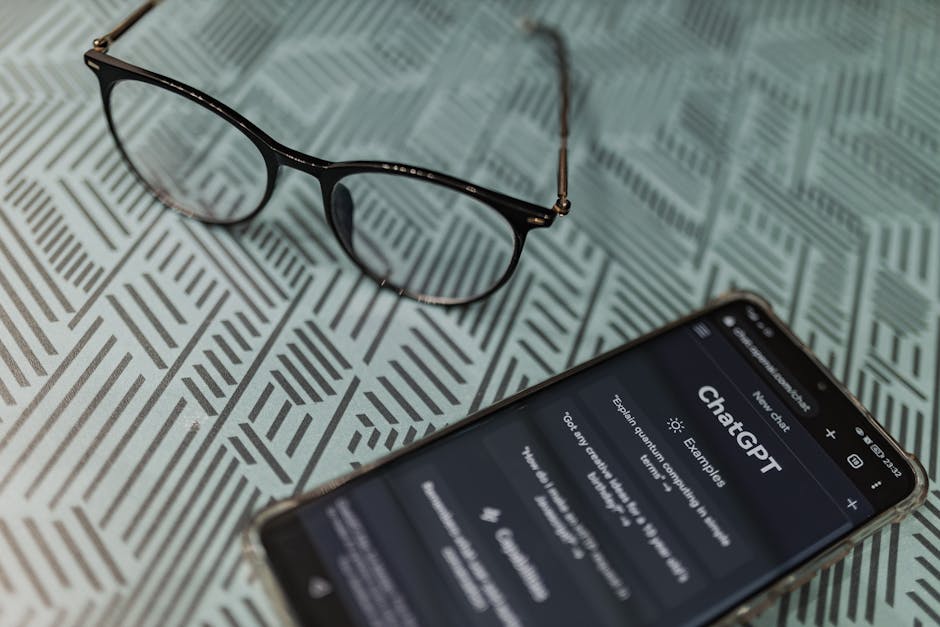
Photo by Matheus Bertelli on Pexels
I'd be lying if I said this works perfectly every time, and I'm suspicious of anyone who tells you it does.
- Background noise wrecks accuracy fast. A recording made in a car with the window down or in a crowded coffee shop can come back with entire sentences garbled or missing.
- Filler words and false starts confuse the "clean it up" step. If you talk in circles — and most people do when they're thinking out loud — the AI sometimes keeps a dead-end tangent as if it were a real point.
- It doesn't know your context. It won't know that "the Thompson thing" is a client account unless you've told it somewhere, so names and shorthand can end up vague in the cleaned-up version.
None of that makes it useless. It just means you should skim the structured output before trusting it, the same way you'd proofread an email before sending it.
How to actually set this up
You don't need a new app to try this, which is part of why I like it:
1. Record a voice memo the normal way, using whatever app came with your phone. 2. Let it auto-transcribe, or copy the audio into a chat AI that supports voice input. 3. Paste the raw transcript into an AI chat and ask specifically for action items, not a "summary." Summaries tend to smooth over the actual tasks buried inside. 4. Skim it for names, dates, and numbers before you trust it — this is the one step worth never skipping.
That third step matters more than people think. Ask an AI to "summarize this" and you'll get a paragraph. Ask it to "list the specific action items with any dates mentioned" and you'll get something you can actually act on.
FAQ
Is it private to record work thoughts and run them through an AI app?
Treat it the way you'd treat any cloud service: fine for everyday tasks and general project notes, not the place for anything genuinely sensitive like financial account details or confidential client information. If your employer has data handling policies, those apply here too — check before you make this a habit for work content.
Do I need a paid app, or does the free stuff work?
For basic capture-and-clean-up, the free transcription built into your phone's own recorder app is usually enough. Paid tools tend to earn their cost with longer recordings, multiple speakers, or searchable archives across dozens of past notes — not with better accuracy on a two-minute solo memo.
Does this work for actual meetings with several people talking?
It works, with caveats. Transcription can usually tell that different voices are speaking, but assigning names to voices reliably is hit or miss unless the app is specifically built for meetings. For a solo brain dump, none of that matters. For a group call, expect to do some manual cleanup on who said what.
The boring tool wins again
This fits a pattern I keep running into: the AI feature that actually earns a permanent spot in your routine is rarely the flashy one. It's not a chatbot that writes your novel or a video generator that makes a passable ad. It's a quiet upgrade to something you were already doing badly — in this case, losing good ideas because typing them down wasn't practical in the moment. If you've ever set up a to-do app only to abandon it two weeks in, the fix might not be a better app. It might be a better way of getting thoughts into any app in the first place.
Comments
Post a Comment