I used to lose ideas the same way every time. I'd be driving, or cooking, or walking the dog, and a thought would land — "email the plumber," "look up that book title," "call mom back" — and by the time I got to a keyboard it was gone. Not dramatically gone, just quietly gone, the way most small thoughts are.
What actually fixed this wasn't a new app. It was switching from typing quick notes to talking them, using the voice transcription that's already built into your phone. Not a fancy AI assistant, not a subscription — just the plain old "convert speech to text" feature sitting in your Notes app, your keyboard, or your voice recorder. I'd ignored it for years because early versions were clunky and half the words came out wrong. The current versions aren't. They're fast, they're accurate enough to trust, and they've quietly become the thing I use more than any to-do app I've ever installed.

Photo by Matheus Bertelli on Pexels
Why typing loses to talking for capture
Here's the thing about capturing a thought: friction kills it. If it takes you twelve seconds to unlock your phone, open an app, and tap out a sentence with your thumbs, you've already lost a good chunk of thoughts to "I'll remember this." You won't.
Talking removes almost all of that friction. Long-press a button, say the sentence, done. On iPhone that's a tap-and-hold on the mic icon in any text field, or a "Hey Siri, remind me to..." if you want it structured. On Android it's the mic on the Gboard keyboard, or Google's Recorder app if you want a running transcript of something longer, like a meeting or a lecture.
The accuracy jump over the last couple of years is the real story here. These aren't the same speech-to-text engines from 2019 that turned "pick up dry cleaning" into "pick a private clearing." On-device language models got good enough that punctuation, names, and context-dependent words mostly land correctly now, even with background noise. I've dictated notes standing next to a running dishwasher and gotten clean text back.
The setup that actually sticks
I've written before about why to-do list apps keep dying after three weeks, and a big part of the reason is that capturing a task always felt like more effort than it was worth. Voice capture fixes the front half of that problem — getting the thought out of your head — but you still need somewhere for it to land. Here's the loop that's worked for me:
- Capture immediately, wherever you are. Voice memo, Notes app dictation, or a quick "Hey Siri/Google, remind me to..." It doesn't matter which. The only rule is: don't wait.
- Let it sit as raw text first. Don't try to file it into the "right" list while you're mid-task. That extra decision is exactly the friction that kills the habit.
- Batch-process it once a day. Five minutes, usually while coffee's brewing, where you skim what you captured and move the real tasks into whatever list app you actually use.
That middle step matters more than people expect. The moment you try to make voice capture *and* organizing happen at the same time, you're back to the twelve-second problem, just with extra steps.
A realistic example of where this pays off
Say you're out running errands on a Saturday. You're at the hardware store and realize you also need to check whether your car's registration is due this month. Old habit: think "I'll remember," and you won't, not until you get a late notice in the mail. New habit: mic button, "check car registration renewal date," fifteen seconds, back to shopping.
By the end of the day you might have six or seven of these scattered across your notes. None of them took more than twenty seconds to capture. When you sit down that evening, you're not starting from a blank page trying to remember what you meant to do — you've got a list already written, in your own words, most of it transcribed correctly on the first try.
Where this breaks down
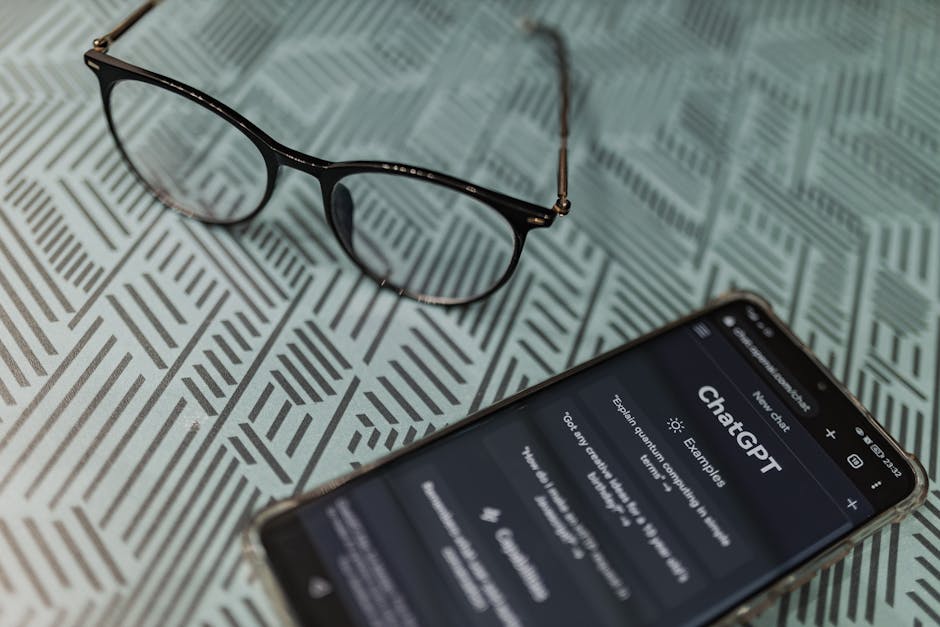
Photo by Matheus Bertelli on Pexels
I'll be honest about the limits, because it's not magic. Dictation still struggles with:
- Uncommon proper nouns — brand names, less common last names, medication names. You'll want to glance back and fix these.
- Genuinely noisy environments — a crowded restaurant or open-window highway driving will still produce garbage some of the time.
- Long, complex sentences with lots of clauses. Short and direct works far better than a rambling paragraph.
My honest opinion, and I know this cuts against a lot of "AI note-taking assistant" hype: you don't need a dedicated app with an AI layer bolted on top for this. The built-in transcription on a modern phone is already good enough for daily task capture, and adding a third-party app just adds another sync point that can break. Save the dedicated AI note apps for when you're transcribing something long and structured, like a meeting.
FAQ
Does this work without an internet connection?
Mostly, yes. Both iOS and Android now handle a large chunk of speech-to-text on-device, so basic dictation works fine in airplane mode or bad signal areas. Longer transcription features, like Google Recorder's speaker labeling or smart summaries, sometimes need a connection.
Is my voice data being stored somewhere?
Depends on the feature. Basic keyboard dictation and Siri/Assistant reminders follow whatever privacy settings you've already set for those services, and both Apple and Google let you review or delete voice history in your account settings. If that matters to you, it's worth checking those settings once rather than assuming.
What if I don't like talking to my phone in public?
Fair, and you're not alone. This trick mostly shines when you're alone — driving, walking, at home. In public settings, I still default to typing a quick fragment rather than dictating out loud. The point isn't to replace typing everywhere, just to remove the excuse in the moments where typing was the reason you gave up.
The boring tool wins again
This is basically the same lesson I keep landing on with this blog: the flashy new AI app rarely beats the unglamorous feature that's already sitting on your phone, doing its job quietly. Voice dictation isn't new, isn't exciting, and isn't going to show up in anyone's "top AI tools of the year" list. But it's the one change that actually got me capturing thoughts before they disappeared, and that's worth a lot more than a clever feature I use once and forget about.
Keep reading
- Passkeys Are Suddenly Everywhere. Here's What They Actually Do and How to Set One Up Without Locking Yourself Out
- You Don't Need to Pick Up Your Phone to Answer a Text Anymore (Here's the Setup That Actually Works)
- I Turned Off Every Notification for a Week, Then Turned Back On Exactly Four. Here's the List
Comments
Post a Comment